
Basiliscus Film produces video interviews and statements for companies, organisations and cultural institutions – in Berlin, throughout Germany and internationally. We’ll come to you with our camera, lighting and sound equipment, or you can visit our studio. We’ve been filming interviews for over twenty years – from directors and curators to board members. We’ll discuss beforehand whether you’ll be asking the questions yourself or whether we’ll lead the conversation. A single statement can be filmed in one to two hours.
What are the differences between a video interview and a video message?
The Video Interview
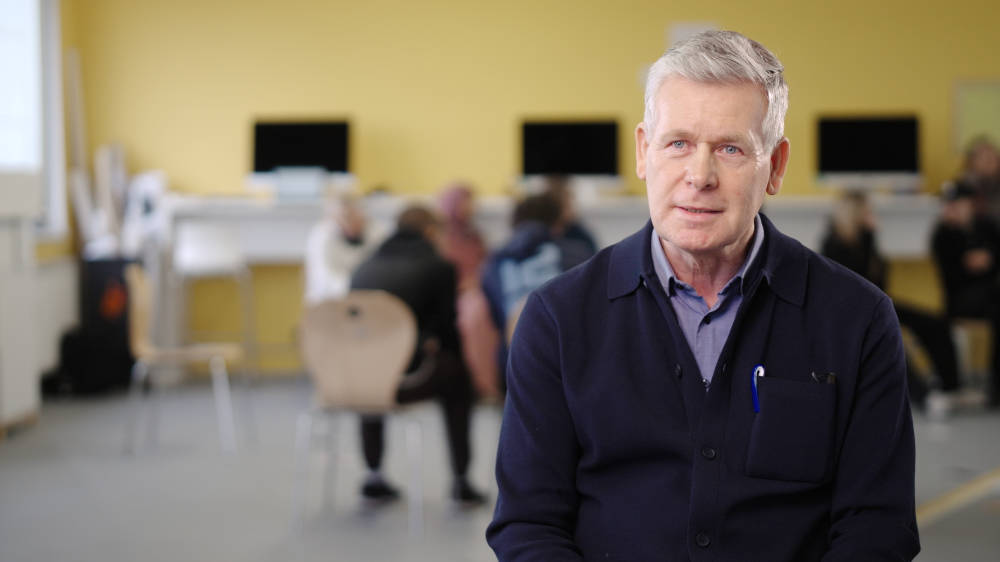
A video interview is usually a conversation between two or more people. In the classic format, there is an interviewer and an interviewee. The interviewer asks their guest questions with the aim of eliciting opinions, experiences, life stories and information – in other words, answers. In a video, this means that the interviewee looks past the camera to the side, as they are engaged in conversation with the interviewer and look at them whilst giving their answers.
A special form of this is the interview using the EyeDirect system. In this case, a mirror system is installed in front of the camera lens. This mirror system projects the face of the interviewer onto the lens. In the video, this means that the interviewee does not look past the camera, but speaks directly into the camera and thus looks directly at the viewers. This special form of interview is a hybrid of a video interview and a statement.
We used the EyeDirect system for the ZDF 37Grad Leben reports, as this format is aimed at a younger audience and the direct approach has become much more established there.
The video message
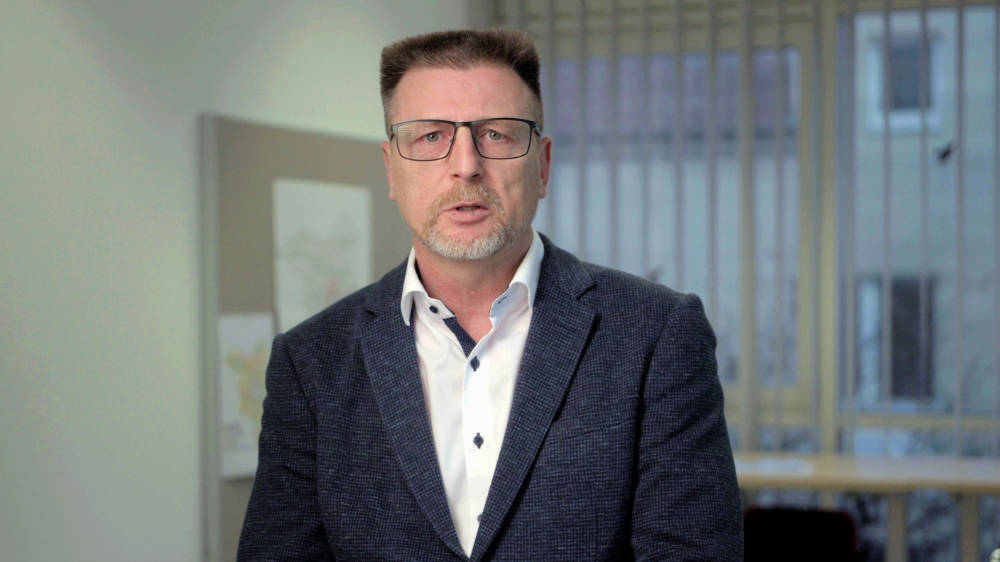
A video message or statement is always delivered by just one person. They convey a message briefly and concisely. This could be a greeting, an expert opinion or an announcement. The information is spoken directly to the camera – the person looks at and addresses the viewers.
Nowadays, this is a very widespread and popular format. However, not everyone can speak freely, openly and at ease to the camera, as there is no one there to nod in agreement or listen. For many people, it is easier to convey a message when they can look at someone. We like to use a teleprompter for this. The message is displayed as text, allowing the person recording the video message to concentrate on reading the text. But be careful: this takes practice too! After all, nobody should realise you’re reading from a script. You want to come across as convincing and self-assured. To achieve this, it’s important to practise your intonation and the flow of your speech.
You can practise this with us too! The best way to do this is to visit our Media Training PLUS page and see which media training course would suit you best.
Examples of how to set up video interviews, drawn from our many years of experience
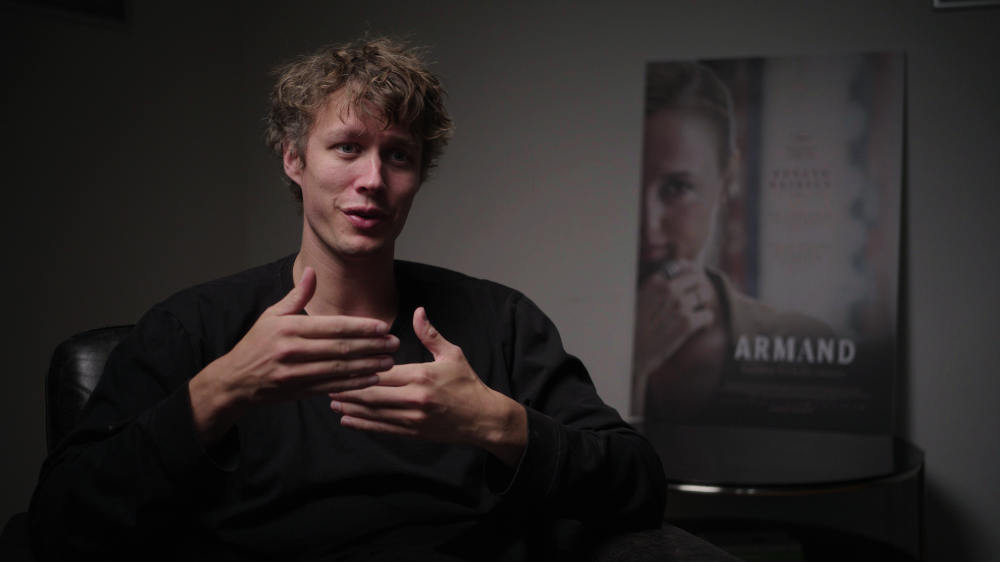
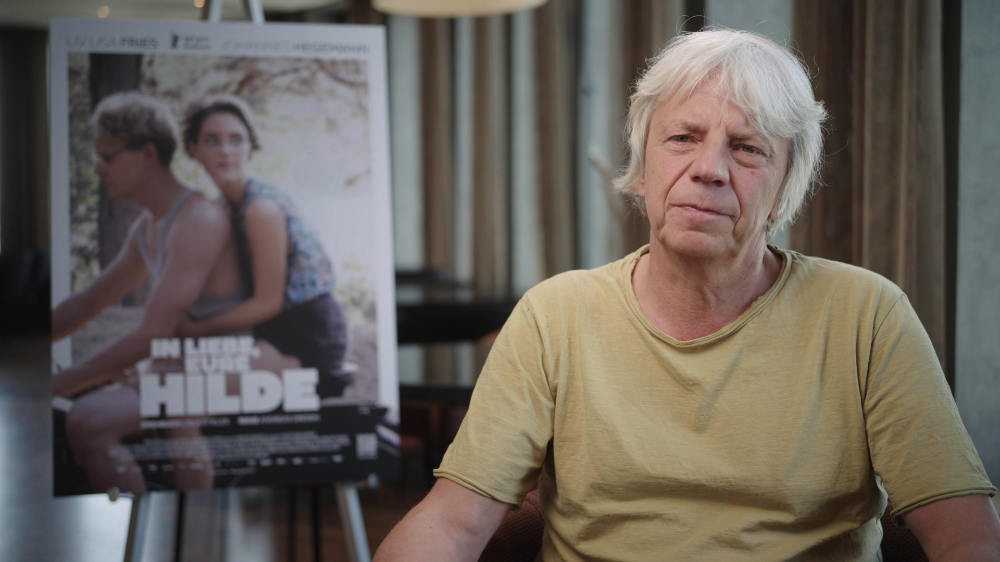
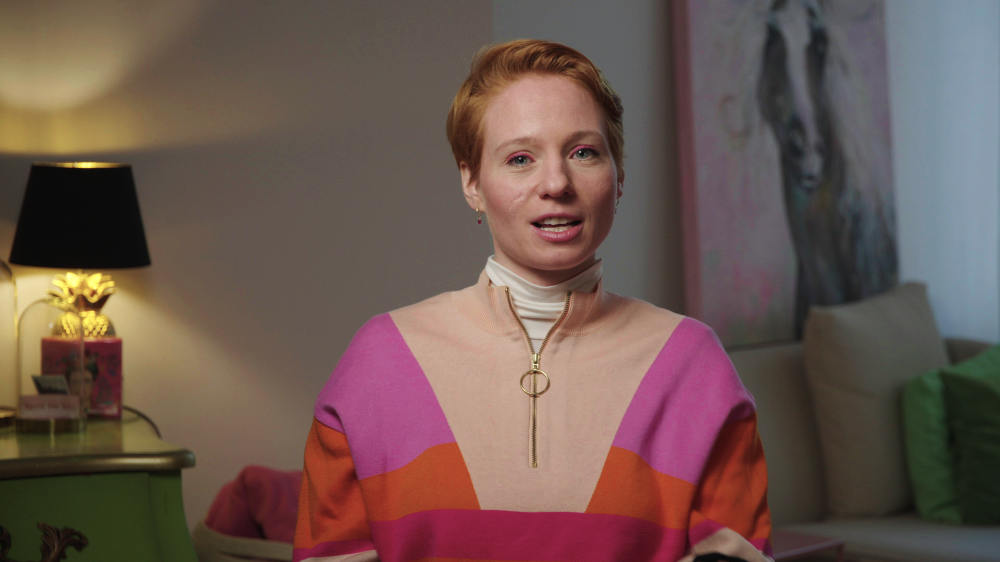
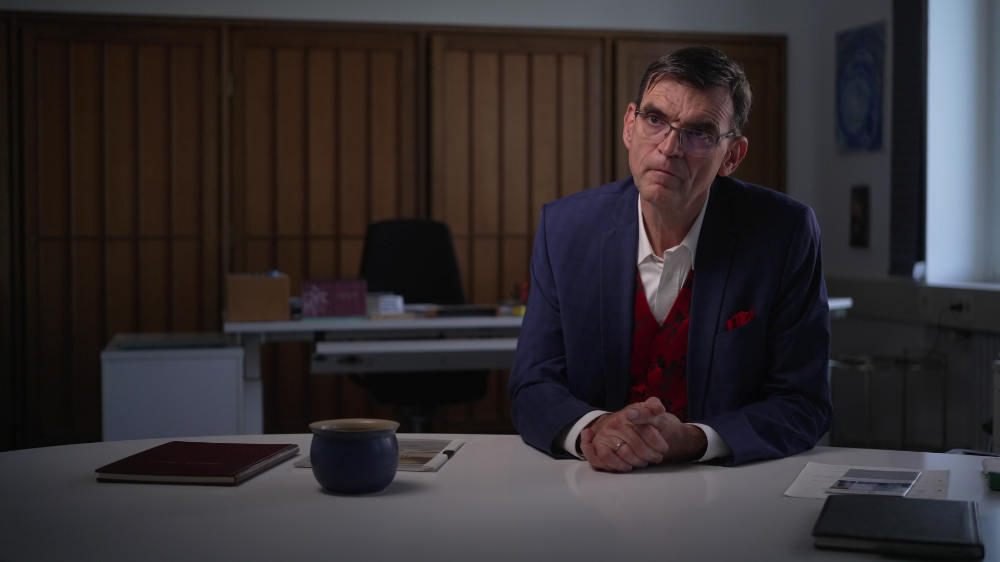
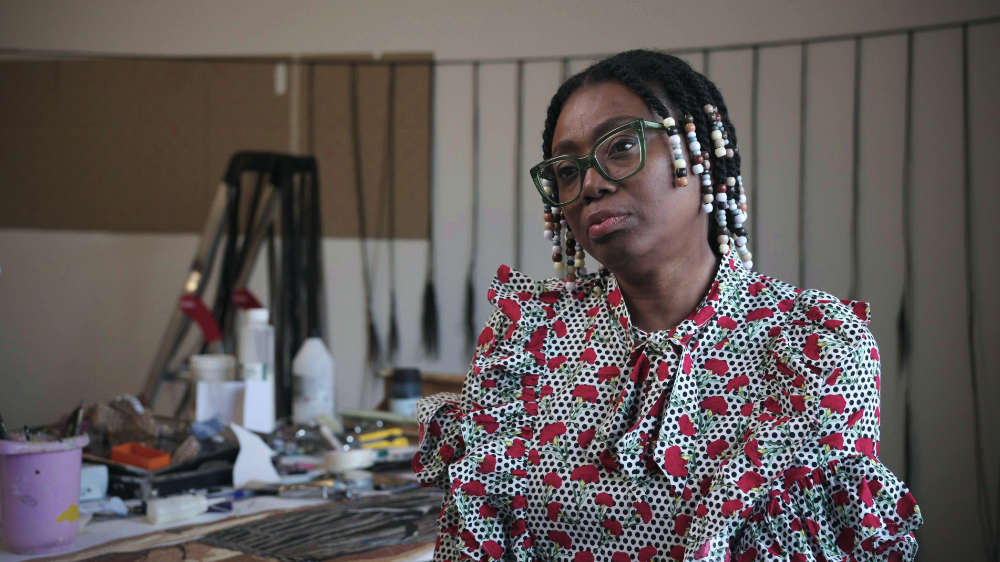
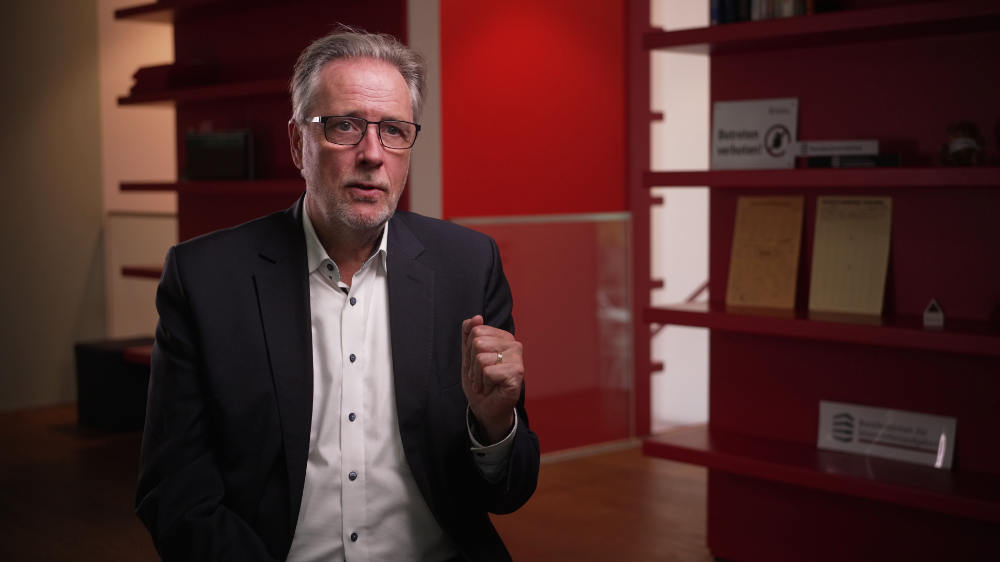
The right venue and atmosphere
The location of your video interview has a significant impact on the overall effect. It should be in keeping with the topic or appear neutral, but never come across as boring. Whether it’s a modern office, a workshop, a production hall or a conference room – we’ll choose the setting that best supports your message. A relaxed atmosphere in front of the camera helps your interviewees come across as natural and authentic.
Lighting, Sound and Visual Design
Professional lighting, clear sound and well-thought-out visual design are crucial. We work with experienced cameramen and sound professionals who make the most of every situation. Whether seated or standing – we ensure that your video interview comes across as lively, dynamic and professional. Lighting and camera angles emphasise the atmosphere and highlight your key messages.
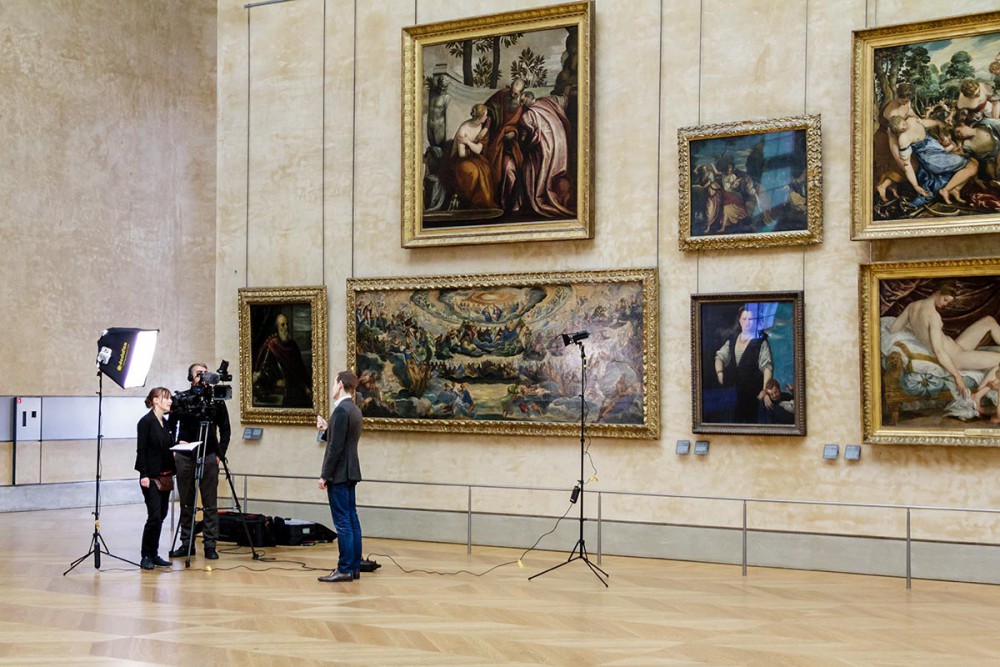

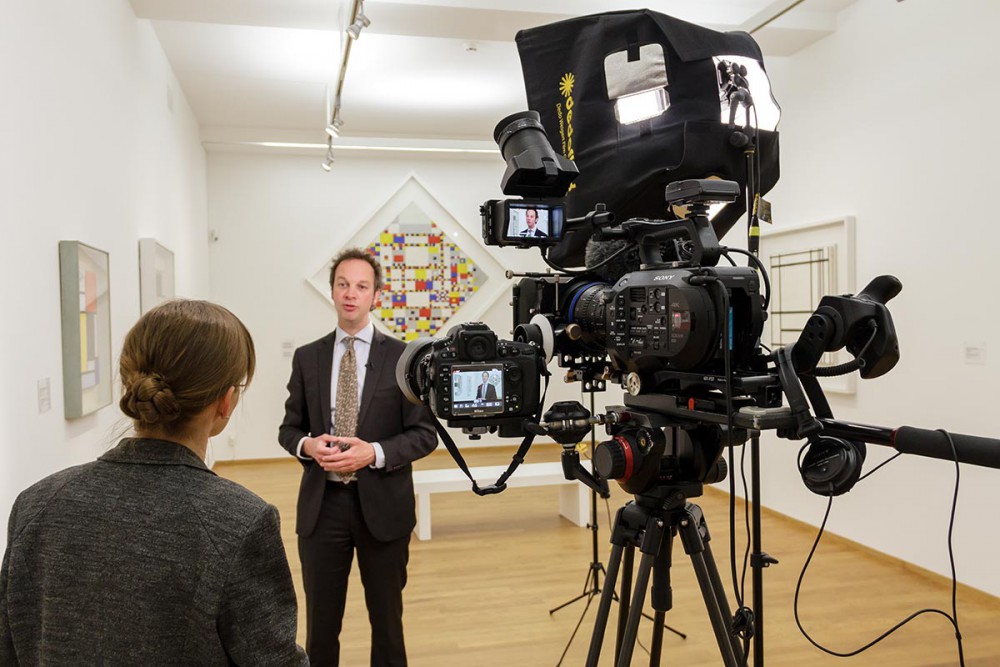
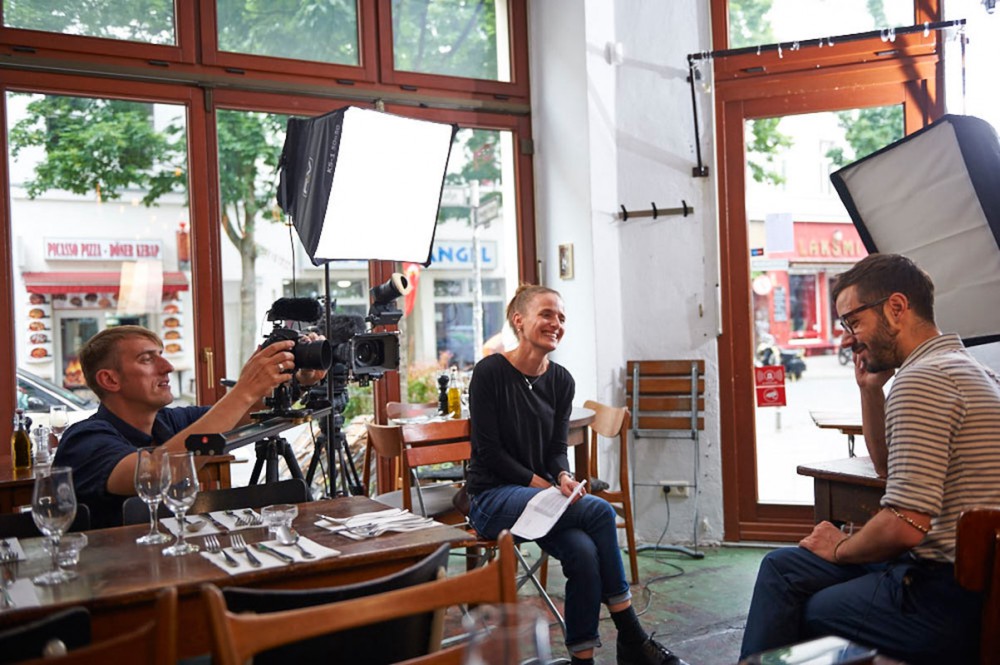

Tips for looking confident on camera
Your professional team for video interviews in Berlin
We usually work in pairs: an editor and a cameraman specialising in lighting. This keeps the team manageable, the atmosphere familiar and the result authentic. Our experience ensures that your message is conveyed in an emotional, credible and professional manner.
FAQ: Frequently asked questions about video interviews and statements
Both options are possible. We’ll bring our equipment straight to you – to your office, your business premises, your premises or any location of your choice. If you prefer a neutral, professional studio atmosphere, you’re also welcome to visit us at our studio.
That depends on the number of people involved and the depth of the content. A single statement can often be filmed – including set-up and take-down – in 1–2 hours. For a more in-depth interview or one involving several people, we’ll work with you to plan a realistic timeframe. However, you should allow for 4–5 hours.
A video statement is a short, concise statement by an individual on a specific topic – ideal for social media or as part of a longer film. A video interview is more conversational, goes into greater depth and is ideal for portraits, feature reports or corporate content. In a statement, the content of the response is more clearly defined than in an interview.
We’ll discuss all the details in advance – the location, topic, key messages and target audience. On the day of filming, we’ll take care of the lighting, sound and camera work. All you need to do is ensure that we have a quiet yet suitable location for the interview. After filming, we’ll handle the editing and post-production, if you’d like us to.
That’s the usual scenario. We’re experienced in helping people relax in front of the camera and bringing out natural, authentic responses. You don’t need to be perfect speakers – that’s what we’re here for.
Alternatively, we’d be happy to offer some media training beforehand, and you can have a look at our brief tips on video interviews on our BLOG.
Yes. We can produce interviews in various languages and, if required, include subtitles or on-screen translations. This is particularly relevant for organisations with an international audience or sponsors from abroad.
The possibilities are endless: interviews with curators about exhibitions, conversations with contemporary witnesses, profiles of artists or craftspeople, statements from patrons and sponsors, or behind-the-scenes insights. We have experience with all these formats and will work with you to develop the right concept.
Of course. On our website, you’ll find a selection of our work – including interviews and statements from various sectors. You’ll also find two examples right here on this page.
Ja, wir haben Erfahrung mit Remote-Produktionen und hybriden Formaten, bei denen eine Person vor Ort ist und eine per Video zugeschaltet wird. Bei der Qualität muss man aber meistens einige Abstriche machen.
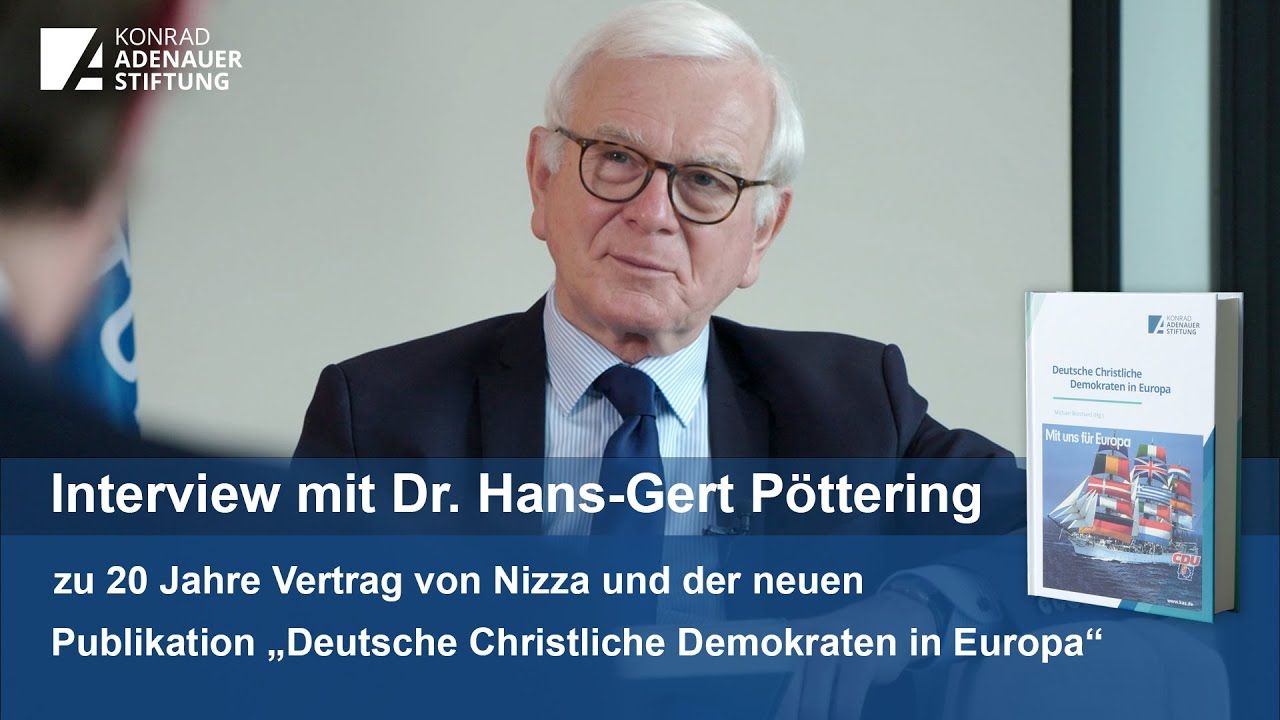
Konrad Adenauer Foundation: Book launch, three cameras

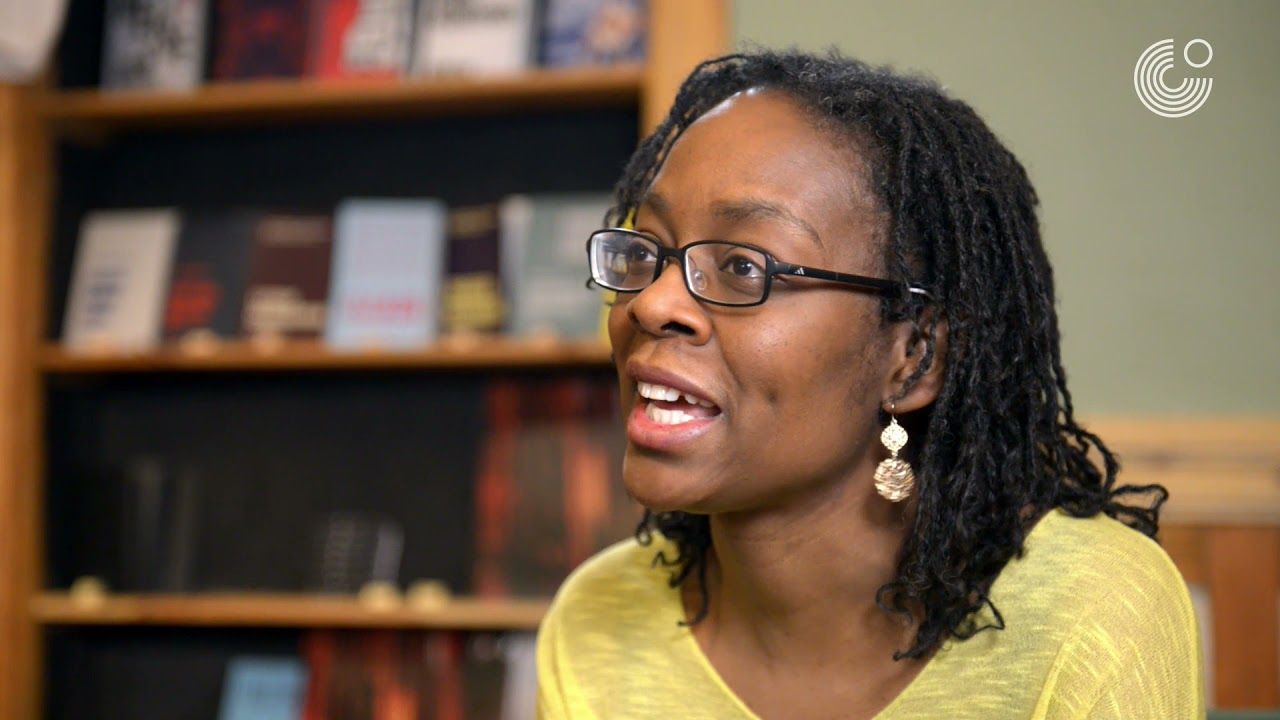
Goethe-Institut: Sharon Dodua Otoo on her novel »Ada’s Room«
What our customers say:
»We hired Basiliscus Film team for a filming project at UEG Week 2025, and the experience was excellent from start to finish. Uwe and Stephanie were highly professional, flexible, and adapted seamlessly to the changes that arose during the project. The quality of their work was outstanding, and everything was delivered on time with great attention to detail. Their kindness and professionalism made the whole process a pleasure. We at A6Life highly recommends their services!«